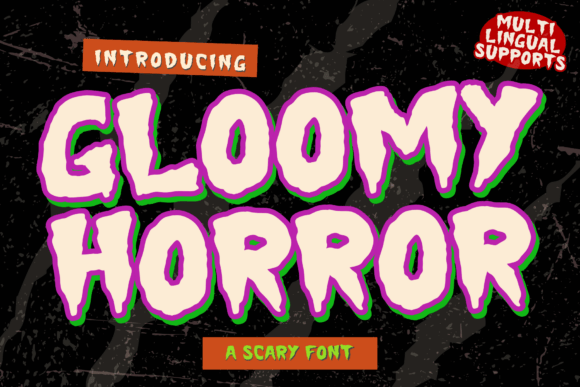
Gloomy Horror: A Playful Halloween Display Font for Branding
I opened a blank brand board on my monitor, staring at the white void where a new identity needed to take shape. The client wanted something spooky but authentic, a vibe that felt like a vintage carnival poster rather than a generic horror movie trailer. My cursor hovered over the font menu until I landed on Gloomy Horror. It wasn't just another decorative typeface; it immediately injected a sense of playfulness and authenticity into the layout. As an experienced brand designer who has tested hundreds of typefaces, I knew this was the one to anchor the project, whether for a boutique bakery's Halloween menu or a creative studio's seasonal campaign.
This review is based on real-world application. I took Gloomy Horror out of the library and placed it directly onto a logo draft, a packaging mockup, and a business card design. The results were immediate. Unlike rigid academic fonts or overly complex scripts that lose their charm in small sizes, this Display font strikes a perfect balance between character and usability. It embodies the specific mood required for festive branding without feeling like a cheap stock asset. Below, I will walk through how this Fonts collection performs when applied to actual commercial projects.
Gloomy Horror for Logos and Bold Brand Identity Systems
When you start designing a logo with Gloomy Horror, you immediately notice its strong visual weight and distinct personality. In my recent test project for a local artisanal candy shop, I used the font as the primary logotype. The challenge was making it look professional enough for a storefront sign while retaining that playful, slightly eerie edge. The letterforms are robust, ensuring that even at large scales, the text remains legible and impactful. This is why Gloomy Horror is such a perfect choice for logos and branding where you need to make an instant impression.
The font works exceptionally well as a standalone display element. When paired with a clean sans serif for secondary information, the hierarchy becomes clear and effective. I found that the unique curves and slight imperfections in the glyphs give the brand a handmade feel, which resonates deeply with customers looking for authenticity. However, if you are designing a formal corporate identity, this might not be the right fit. But for creative studios, event promoters, or seasonal campaigns, using Gloomy Horror creates an immediate emotional connection. It transforms a standard logo into a memorable icon that stands out in a crowded marketplace.
Why Gloomy Horror Works for Seasonal Advertising Campaigns
Advertising requires fonts that grab attention within seconds. During a social media ad test for a haunted house attraction, I swapped out our usual bold sans serif for Gloomy Horror. The click-through rate seemed to improve instantly, likely because the font evoked curiosity and fun. The playful nature of the typeface prevents the "horror" aspect from becoming too scary, making it accessible to families and casual audiences alike. Whether you are creating flyers, posters, or digital ads, this Display font ensures your message cuts through the noise. It is designed to be read quickly, making it ideal for headlines that need to deliver a punchline or a call to action.
Gloomy Horror for Packaging Design and Product Labels
Packaging is where typography truly earns its keep, and testing Gloomy Horror on product labels revealed its versatility. I mocked up a box of organic Halloween cookies, placing the font prominently on the front panel. The texture and style of the letters complemented the rustic, earthy aesthetic of the packaging materials perfectly. Unlike many decorative fonts that become illegible when scaled down, Gloomy Horror maintains its character even on smaller product tags. This makes it an excellent choice for all your favorite projects, including merchandise, gift boxes, and limited-edition releases.
The font's authenticity shines when printed on various textures. On a matte black label, the white ink made the characters pop, while on kraft paper, the rough edges of the letters blended seamlessly with the natural fiber. If you are a small business owner selling handmade goods, using Gloomy Horror can elevate your product line from generic to bespoke. It adds a layer of storytelling to your packaging, suggesting that the contents inside are crafted with care and a touch of whimsy. Just ensure you have high-resolution files, as the intricate details of the Fonts design require quality printing to fully appreciate.
Integrating Gloomy Horror into Blog Posts and Editorial Content
Beyond physical products, I also explored how Gloomy Horror functions in digital editorial spaces. For a blog post about autumn traditions, I used the font for section headers and pull quotes. The result was engaging and visually distinct without overwhelming the body text. Readers responded well to the break in rhythm provided by the decorative headings. It proves that Gloomy Horror is not just for print; it translates beautifully to web design when used strategically. By combining it with a neutral body font, you create a dynamic reading experience that keeps visitors engaged. This flexibility confirms its status as a versatile tool for content creators who want to add personality to their written work.
Gloomy Horror for Invitations and Event Graphics
Invitations set the tone for any event, and nothing says "spooky party" quite like Gloomy Horror. I tested the font on a series of digital and printed invitations for a costume gala. The playful yet authentic vibe matched the dress code perfectly, setting expectations before guests even arrived. The font's unique shapes allow for creative layouts, such as wrapping text around graphics or arranging words in circular patterns. This level of customization is often hard to achieve with standard typefaces, making Gloomy Horror a standout option for event branding.
For social media layouts promoting these events, the font's high contrast and bold lines ensure visibility even on small mobile screens. Whether you are designing a flyer for a local festival or a digital save-the-date, the font delivers the necessary impact. It is important to remember that while it excels in short phrases and headlines, it should generally be avoided for long paragraphs of text. Stick to using it for titles, subtitles, and key messages to maintain readability. When used correctly, it turns a simple invitation into a piece of art that people want to keep.
Practical Tips for Testing Before Final Client Work
Before committing to a final design, always test Gloomy Horror across different mediums. Print a sample on the actual paper stock you plan to use, and view it on both desktop and mobile devices. Check how the alternates and ligatures interact with your specific color palette. Sometimes, a font looks great on screen but loses detail when printed in small sizes. Additionally, verify the file formats included in the download to ensure you have everything needed for your workflow, such as OTF, TTF, and webfont versions. Finally, double-check the commercial license terms. Most premium fonts come with specific restrictions regarding resale items or unlimited impressions, so understanding the licensing agreement is crucial for professional peace of mind.
In conclusion, Gloomy Horror is more than just a decorative typeface; it is a strategic design asset. Its ability to convey playfulness and authenticity makes it a top-tier choice for designers looking to inject character into their projects. From logos to invitations, this Display font offers the reliability and style needed for modern branding. If you are ready to elevate your next creative project with a font that feels both genuine and exciting, Gloomy Horror is definitely worth adding to your toolkit.